Short Haircuts for Men: The Complete Guide to Who They Flatter (and Who They Don't)
Haircuts & Styles9 min read

Considering switching to a short haircut? It's a significant aesthetic decision. Instead of guessing, this guide will give you a clear, logical framework to help you decide whether a short haircut is the right move for you. We'll analyze the three decisive factors: your face shape, your hair type, and your lifestyle. The goal is singular — that you walk out of the barbershop with a cut that flatters you, looks professional, and suits the busy life of a modern man in Ramat Gan.
Analyzing Face Shape: The Science Behind the Right Choice
The most important factor in the success of a short haircut is how well it harmonizes with your face shape. A professional barber's goal is to use your hair to create the illusion of an oval face — considered the symmetrical ideal. Understanding your own shape is the first step toward making the right decision. To determine your face shape accurately, stand in front of the mirror and examine the contours of your face. These are the main shapes:
- Oval face: Considered the most ideal and balanced shape. The verdict: highly flattering. Almost any short haircut, from a buzz cut to a crew cut, will look excellent on you.
- Square face: Characterized by a strong jawline and a wide forehead. The verdict: highly flattering. A short haircut with a little height on top (such as a crew cut or a fade with volume) softens the sharp angles and flatters those masculine lines.
- Round face: Characterized by similar width and length, with no sharp angles. The verdict: requires tailoring. The goal is to create the illusion of length and height. A short haircut on the sides with significant volume on top (like a short pompadour or a high fade) will "lengthen" the face and create a sharper look.
- Heart-shaped face: A wide forehead and a narrow chin. The verdict: flattering. A haircut that's too short may emphasize the width of the forehead. Styles with a bit more length and texture on top — but not too high — will create the right balance.
- Long/rectangular face: A face whose length significantly exceeds its width. The verdict: requires tailoring. Avoid adding height. Cuts that are short but relatively flat, like a French Crop or a buzz cut, will work better than cuts with top volume that would lengthen the face even further.
| Face Shape | Style Recommendation |
|---|---|
| Oval | Almost anything: buzz cut, crew cut, fade. Maximum flexibility. |
| Square | Crew cut, fade with top volume, cuts that emphasize sharp lines. |
| Round | High fade, short pompadour. Any style that adds height and creates angles. |
| Heart | Crew cut with texture, slightly longer styles on top, not too cropped. |
| Long | Buzz cut, French Crop. Avoid excess volume on top. |
Beyond the Face: How Your Hair Type Affects the Result
Even if you've chosen the perfect cut for your face shape, it may look bad if it doesn't suit your hair type. Your hair's texture and density are the second variable in the equation. It's important to understand the pros and cons of different hair types in the context of short haircuts.
- Thin/fine hair: Contrary to popular belief, a very cropped cut (buzz cut) doesn't always flatter thinning hair. It can expose the scalp and emphasize sparse areas. The solution is usually a short but smart cut, like a French Crop with texture or a classic crew cut. These styles use the limited length to create the illusion of density and volume, especially when the hair is combed forward and slightly tousled.
- Thick, full hair: This is the ideal hair type for most short haircuts. It holds its shape well and allows for a wide range of styles, from a sharp fade to a precise crew cut. That said, the challenge here is to avoid the "helmet effect." A professional barber will know how to use thinning techniques to reduce the weight, create movement and texture, and ensure the cut doesn't look like one uniform mass of hair.
- Curly/wavy hair: A short haircut for curly hair is an art form. If the cut is too short, the curls may "spring up" and become unmanageable. The key is to work with the hair's natural texture, not against it. A fade is an excellent option, since it keeps the sides short and tidy while leaving controlled length on top to show off the curls in a flattering way. It's important to find a barber who understands curly hair and knows how to cut it to prevent frizz and preserve the curl pattern.
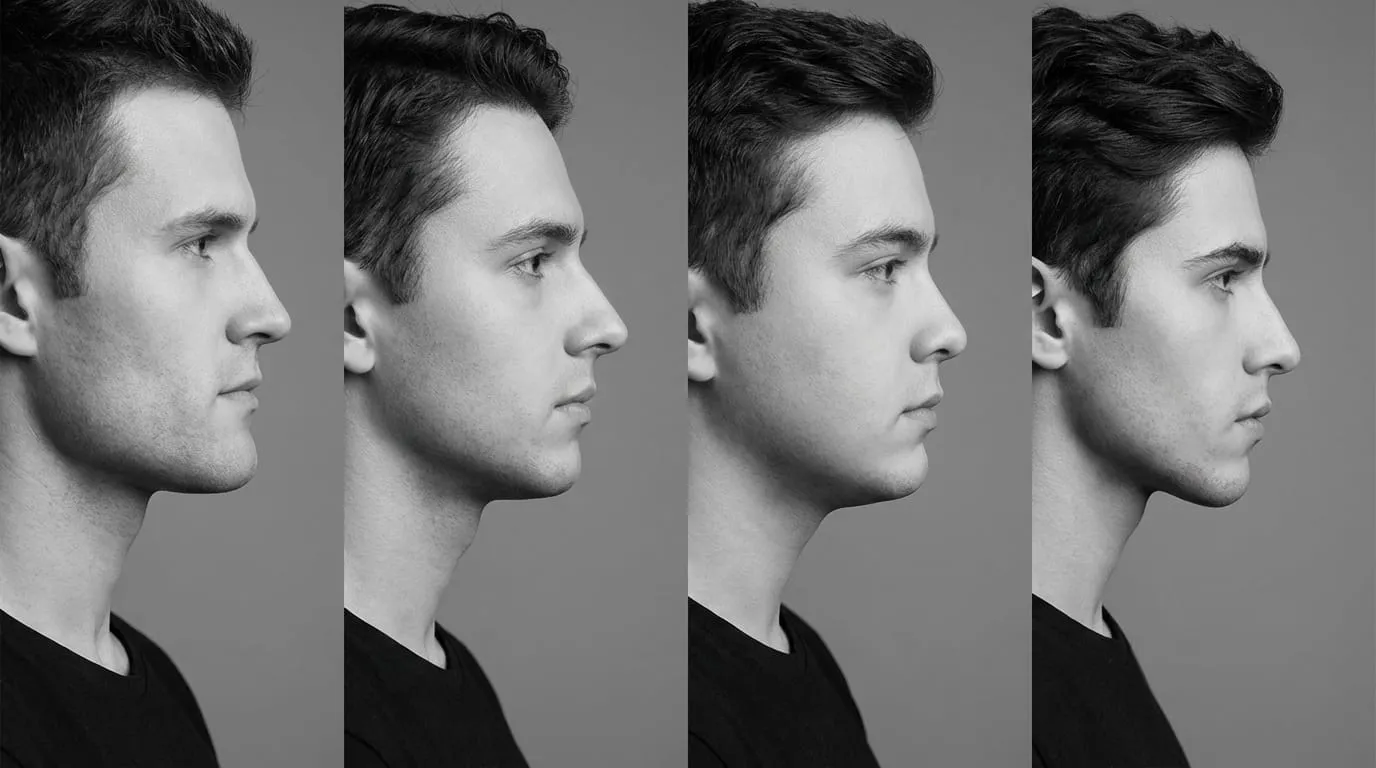
Lifestyle and Maintenance: Are You Really Built for a Short Haircut?
Now for the practical part — the one that speaks directly to the busy man in central Israel. There's a common myth that a short haircut equals zero maintenance. That's a mistake. A striking short haircut actually demands a higher commitment to ongoing upkeep than medium-length hair. It requires precision, so every little bit of growth becomes immediately noticeable.
Let's break down the "commitment factor": a sharp fade or a precise crew cut looks its best in the first two weeks. After that, the lines start to blur, the hair at the nape and on the sides grows out, and that sharp, clean look fades away. This means a visit to the barber every 2–3 weeks to maintain the look. A medium-length cut, by contrast, can still look good even after 4–6 weeks. In terms of time and money, that's a significant difference. If you already know you don't have the time or patience for frequent salon visits, a very short haircut might not be the most efficient choice for you.
In addition, most modern short haircuts rely on styling products to look their best. Whether it's wax for a matte, tousled look, pomade for a shiny, combed style, or clay for volume and texture — you'll likely need to spend a minute or two each morning on styling. It's not a huge commitment, but it's part of the equation. If you're looking for a "wash-and-go" style, only a buzz cut will truly meet that requirement.
Inspiration: Popular Styles and Their Fit
Now that we understand the principles, let's look at a few specific styles that have become modern classics. These are cuts that every good barber knows, and they make an excellent starting point for a conversation with him.
Buzz Cut
Description: The ultimate short haircut, with a uniform, very short length all over the head, usually done with clippers. There are variations in length (from a number 1 to a number 4), but the principle stays the same. Especially suited to: Men with strong, well-defined features, an oval or square face shape, and a symmetrical skull line. It's the perfect solution for anyone looking for zero daily styling fuss, and also a great option for men with very thin hair who want to embrace a clean, rugged look.
Crew Cut
Description: A timeless classic. The hair on the sides and at the nape is very short, gradually getting longer toward the top of the head. The top stays short enough to stand on its own or with very little styling product. Especially suited to: Almost any face shape and hair type. This is the "safest" and most elegant cut out there. It's professional, masculine, relatively easy to maintain (requiring a haircut every 3–4 weeks), and flatters a wide range of men. It frames the face without being too extreme.
Fade
Description: Not a haircut in itself, but a technique that's incorporated into many modern cuts. The hair is graded gradually and smoothly, from very short at the bottom of the head (sometimes all the way down to skin level, known as a Skin Fade) and getting longer toward the top. A fade can be combined with a variety of styles on top. Especially suited to: Men looking for a sharp, clean, contemporary look. The fade works great with thick or curly hair because it controls the volume on the sides and creates striking contrast with the top. It's a style that demands high maintenance to keep the grading sharp.
Questions & Answers
I have thinning hair and a receding hairline — is a short haircut a good idea?
Absolutely, but with the right choice. As noted, a buzz cut that's too short may expose the scalp and emphasize a receding hairline. By contrast, a short, structured cut — like a French Crop with a short fringe combed forward or to the side — can be a great strategy. It creates the illusion of density at the front of the head, blurs the hairline, and draws attention away from the recession. The key is to create texture and controlled "mess" on top.
How often will I need a haircut to keep a sharp look?
The answer depends on how precise the cut is. The rule of thumb is: the shorter the cut and the sharper the lines, the more frequent the maintenance. For a sharp fade (especially a Skin Fade), you'll need to visit the barber every 2–3 weeks to keep the transition smooth. For a classic crew cut, you can stretch it to 3–4 weeks. Anything beyond that, and the cut will lose its original shape and start to look unkempt.
How do I find a barber who knows how to match a haircut to me?
The best recommendation is to look for a barber, not a general hairstylist. Barbers specialize in modern men's haircuts and in techniques like the fade and clipper work. Search Instagram for barbers in the Ramat Gan or Tel Aviv area and check out their portfolios. Look for photos of haircuts on clients with a face shape or hair type similar to yours. When you come in for your appointment, bring along 2–3 inspiration photos — but more importantly, be open to listening to the expert's advice. A good barber will know how to analyze your face and hair and suggest the best match for you, even if it's a little different from what you had planned.
Choosing a short haircut is more than a passing trend; it's a statement of style, efficiency, and confidence. By analyzing the key factors — face shape, hair type, and lifestyle fit — you can make an informed decision that ensures your next haircut not only looks good, but also feels right. Walk into your barbershop armed with this knowledge, and the odds of leaving satisfied are higher than ever.
Want this on your own head?
Our team at 7 Rashi St, Ramat Gan is waiting for you — booking online takes less than a minute.