
The Skin Fade Haircut in Ramat Gan — The Complete Guide
There's a fade, and then there's a skin fade — the moment the taper drops all the way down to bare skin and the contrast cranks up to maximum. It's the cleanest, most "barber-flex" look out there, and it demands a barber who knows exactly what he's doing.
How much it costs: A men's haircut at our Ramat Gan shop starts at ₪90 (includes consultation and a personal fit). Fade, skin fade and taper are all included in the men's haircut price; adding a beard or a scissor cut is priced separately. See the full price list
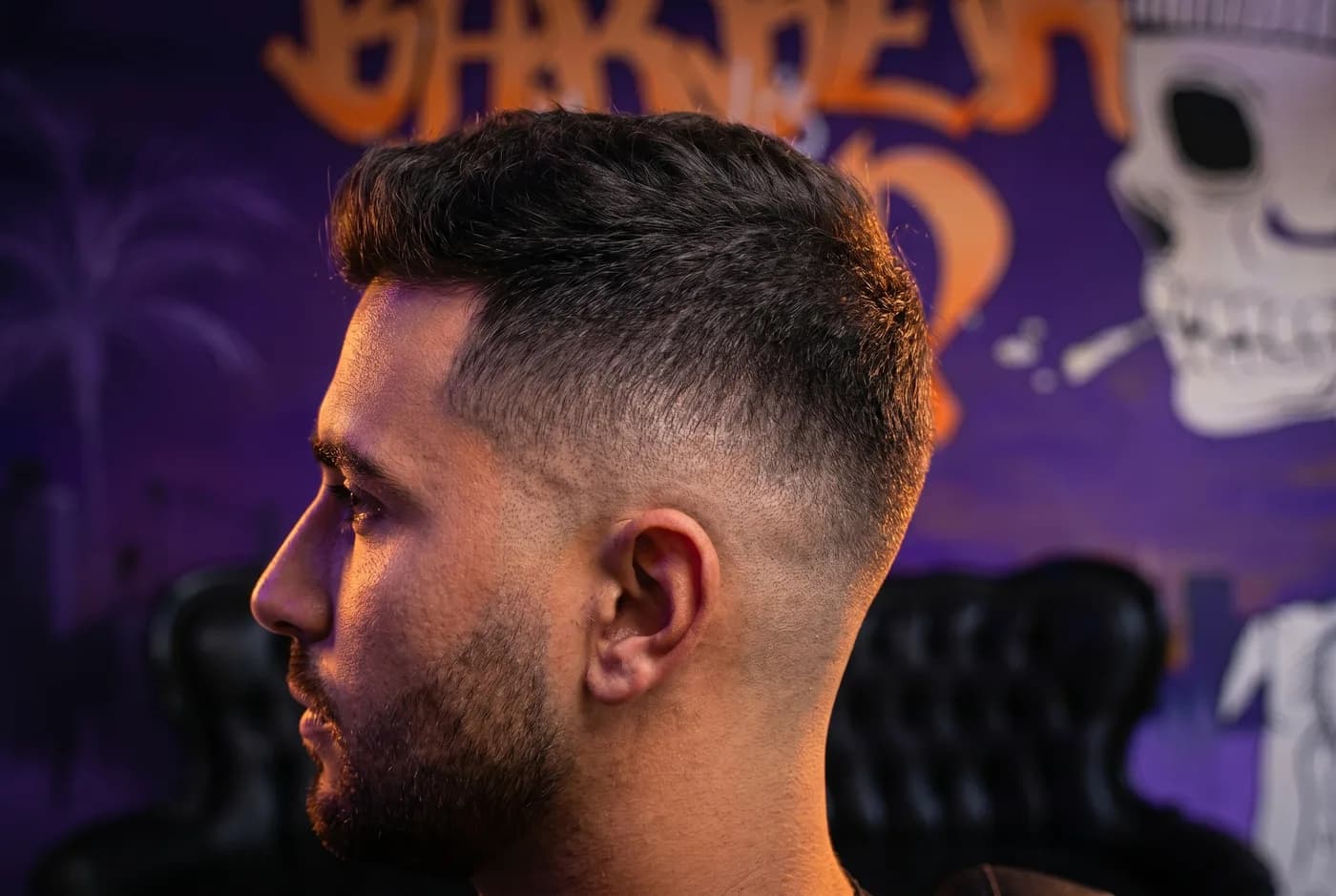
What is a Skin Fade?
A skin fade (also known as a bald fade) is the sharpest edge of the fade family: a taper that starts at perfectly smooth skin — no stubble, no shadow — and climbs gradually up into full-length hair on top. The lowest band is shaved with a foil shaver or a straight razor, and the transition is built above it: a subtle "shadow" zone of the shortest stubble, an intermediate taper, and finally the full length. Every millimeter of that transition is on full display, which is why no haircut exposes sloppy work faster than a skin fade — and none rewards precision more. In the trade you'll also hear "zero gap" in this context — dialing the clipper blades down to no space between them — one of the tools that make this ultra-smooth transition possible.
It's important to distinguish between a skin fade and a number-zero taper: a clipper on zero leaves a tiny layer of stubble that still darkens the skin, while a true skin fade reaches bare, clean skin. The difference sounds small on paper, but visually it's enormous — that bright starting point at the skin is exactly what creates the dramatic contrast the style is known for. Technically, it's also the hardest part: the move from bare skin to stubble has to be soft and gradual, or you get a hard line that can't be hidden and that no styling product will save. That area, which barbers call the "shadow zone," is where the work gets judged: the more evenly it spreads, the more expensive the haircut looks — literally.
And if you scroll through any barbering feed on Instagram or TikTok, most of the work that stops your thumb will be skin fades — this is the style that built the aesthetic of modern barbershop culture. It pairs perfectly with a crisp outline (line-up) at the hairline and temples, and the strongest combination of all: a skin fade that blends gradually into a shaped beard, so the bare skin on the sides flows into the beard with no visible seam. The result is a sculpted look that holds the whole face together as one unit.
Who does the Skin Fade suit?
The skin fade suits anyone who loves a sharp, well-groomed look — and is willing to maintain it. It works beautifully on dark, thick hair, where the contrast between skin and hair is especially strong, and it's incredibly flattering on curly hair too: defined curls above bare sides is a combination that never goes out of style. Who should think twice? Anyone with particularly sensitive scalp skin or prominent scars on the sides — worth talking it through in the chair, because sometimes a taper that leaves a thin layer of stubble to blur things is the better call. And contrary to popular belief, a skin fade doesn't have to be loud: at a low height it looks completely refined and tidy, and at a high height — a real statement. Both routes are open. One last note for the undecided: lighter hair color creates a softer contrast against the skin, so blondes naturally get a gentler skin fade — not a downside, just a different character of the same cut.
Skin Fade variations worth knowing
Low Skin Fade
The skin is exposed only in a narrow band above the ears and the nape, and the taper stays low and understated. The right choice for anyone who wants a taste of the skin fade's sharpness without changing the whole look — and also the variation that's easiest to live with between cuts, since the regrowth is less noticeable. It's the height we'll usually recommend before your first time with the style: impressive, but without the full commitment.
Mid Skin Fade
The skin line climbs to the height of the temples and creates a clear presence without going extreme. This is the sought-after middle ground: enough drama to make the cut stand out, enough balance to work at the office and at the beach alike. If it's your first time with a skin fade — there's a good chance you'll walk out with this one.
High Skin Fade
The skin reaches almost up to the crown line, and the contrast is at its peak. This style doesn't apologize: it reveals the structure of the skull, frames the face with maximum sharpness and makes any styling up top look twice as good. It takes confidence — and gives it back with interest.
Skin Fade with a Beard
The connection between the bare skin on the sides and a shaped beard is a league of its own: the beard is tapered upward, the fade drops downward, and they meet in the middle without you seeing where. When the connect is done right, the face gets one continuous frame — one of the most requested combinations at our shop, and worth booking a slot that includes beard shaping too.
Skin Fade with a Line-Up
The skin fade's strong contrast is completed by a straightened outline at the front and temples: the graphic line-up turns the face frame ruler-sharp, and the combination of the two is the look most identified with contemporary barbershop culture. Good to know up front — a straight line requires a hairline that suits it and more frequent refreshing, so it's worth talking it through before you decide.
Skin fade vs. fade vs. taper vs. zero
| Style | How short at the sides | Contrast | Upkeep frequency | Best for |
|---|---|---|---|---|
| Skin fade | Down to bare skin (zero) at the bottom | Maximum — sharp and dramatic | Every 1–2 weeks | Anyone who loves a clean, sharp look and is up for frequent touch-ups |
| Regular fade | Graded to a low guard (1–2), not to skin | Medium–high | Every 2–3 weeks | Most men — a balance of sharpness and flexibility |
| Taper | Gentle shortening at the temples and nape only | Subtle and understated | Every 3–4 weeks | Conservative settings, or anyone wanting a tidy look that lasts |
| Buzz / zero | One even short length all over | None — uniform length | Every 1–2 weeks (hairline) | Minimal upkeep and an understated look |
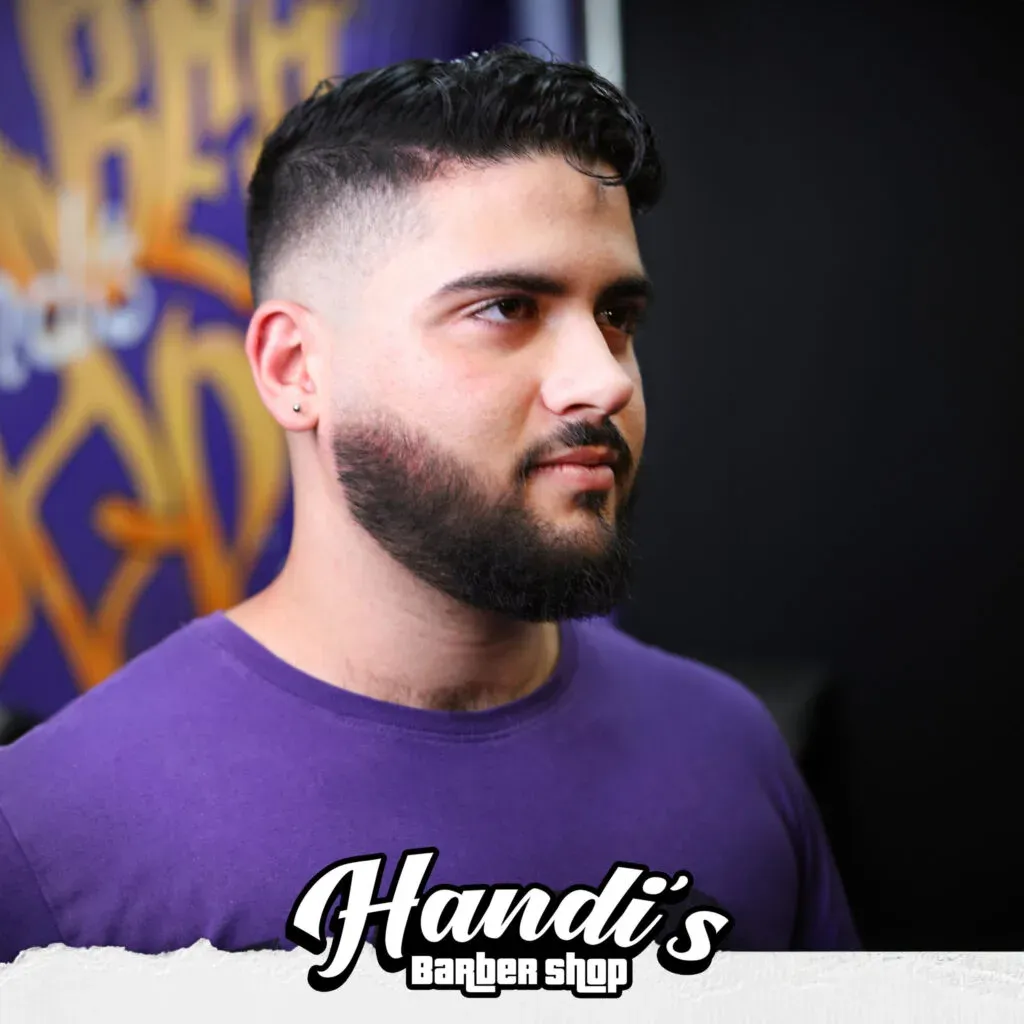
The Skin Fade from our chair
Real client results — this is how it looks when you leave our shop in Ramat Gan.


How to keep it sharp between cuts
Let's be honest: the skin fade is the haircut most worth maintaining — and the fastest to lose its shine. The bare skin fills in with stubble within a few days, and the contrast that works all the magic softens right along with it. The accepted standard is a refresh every 2–3 weeks, and fans of the meticulous look bump it up to ten days ahead of events. So what do you do at home? First, look after the skin: a light moisturizer if dryness shows up, and sun protection in the Israeli summer — yes, the bare sides burn too. Style the top as usual according to your hair type, and we strongly recommend resisting the urge to shave your own nape line between cuts: a crooked line done in front of a mirror at home takes weeks to fix, and a short professional refresh does the same job without the risk.
A pro tip for the days between cuts: if the sides have already grown some stubble and you don't have time for a full appointment, a quick refresh of the nape and the lines brings back a lot of the sharpness — a matter of minutes. And one more: after a shave down to the skin, the sides are a little sensitive for the first day or two. Better to skip alcohol-based products in the area, let the skin breathe, and if you train at the gym — a clean towel between your head and the equipment will save you some needless irritation.
The Skin Fade in Ramat Gan
At 7 Rashi St in Ramat Gan, the skin fade isn't just another line on the menu — it's the team's calling card. Handi and his barbers built their reputation on exactly these transitions: patient work on the shadow zone, checking from every possible angle, and finishing lines that stay sharp even in a close-up photo. Want to feel what it's like when the taper is truly flawless? Booking on Calmark takes less than a minute — we work by appointment only, so the chair is waiting for you and not the other way around. And by the way, people come for our skin fade from Givatayim and Bnei Brak too — because a truly perfect transition is worth a five-minute drive.
Skin Fade — questions & answers
What's the difference between a skin fade and a regular fade?
In a regular fade, the lowest point is short stubble (a number zero or half), while in a skin fade it's perfectly smooth skin, shaved with a foil shaver or a razor. The result: stronger contrast, a sharper look and more frequent maintenance. Everything else — the height of the taper, the style on top, the beard connect — is shared by both.
How often does a skin fade need refreshing?
To keep that "just walked out of the barbershop" look — every 2–3 weeks. The bare skin fills in fast, and after three weeks a skin fade effectively becomes a regular fade. Some people refresh every ten days before events — and that short trip is worth every minute.
Does shaving down to the skin itch or hurt?
It shouldn't — we work with a dedicated foil shaver and experienced hands, and the experience is completely comfortable. If your skin is sensitive or prone to redness, just tell us at the start of the appointment: we'll choose the right tools and the right level of exposure, so you walk out sharp without any irritation.
Does a skin fade suit curly hair?
Hugely. The bare sides clean up the silhouette exactly where curls go wild, and the texture on top gets all the attention. It's one of the most requested looks at our shop — free curls above a clean skin fade — and it works on both soft and tight curls. Small tip: bring a photo of the length you like on top — with curls, the visible length changes dramatically between wet and dry, and that helps us dial it in precisely.
How much does a skin fade cost?
A skin fade falls under the men's haircut service, and the cost is set by the service — it's shown clearly when you book on Calmark, before you confirm. Want the full picture up front? The pricing page has it all in one place.
What is a bald fade? Is it the same thing?
Yes — bald fade and skin fade are interchangeable names for exactly the same technique, where the taper drops down to bare skin. You'll sometimes hear "zero fade" too, but that's a different term: a zero leaves a thin layer of stubble that darkens the skin, while a skin fade reaches the skin itself. If it matters to you to be precise with your barber — say "down to the skin" and there's no way to get it wrong.
Related styles worth knowing
Each style gets its own guide here — and if you want the real thing, the service page is waiting.
Want a Skin Fade? Let's talk
Booking on Calmark takes less than a minute — pick a service and time, and arrive relaxed at 7 Rashi St, Ramat Gan.