
The Temple Fade Haircut in Ramat Gan — The Complete Guide
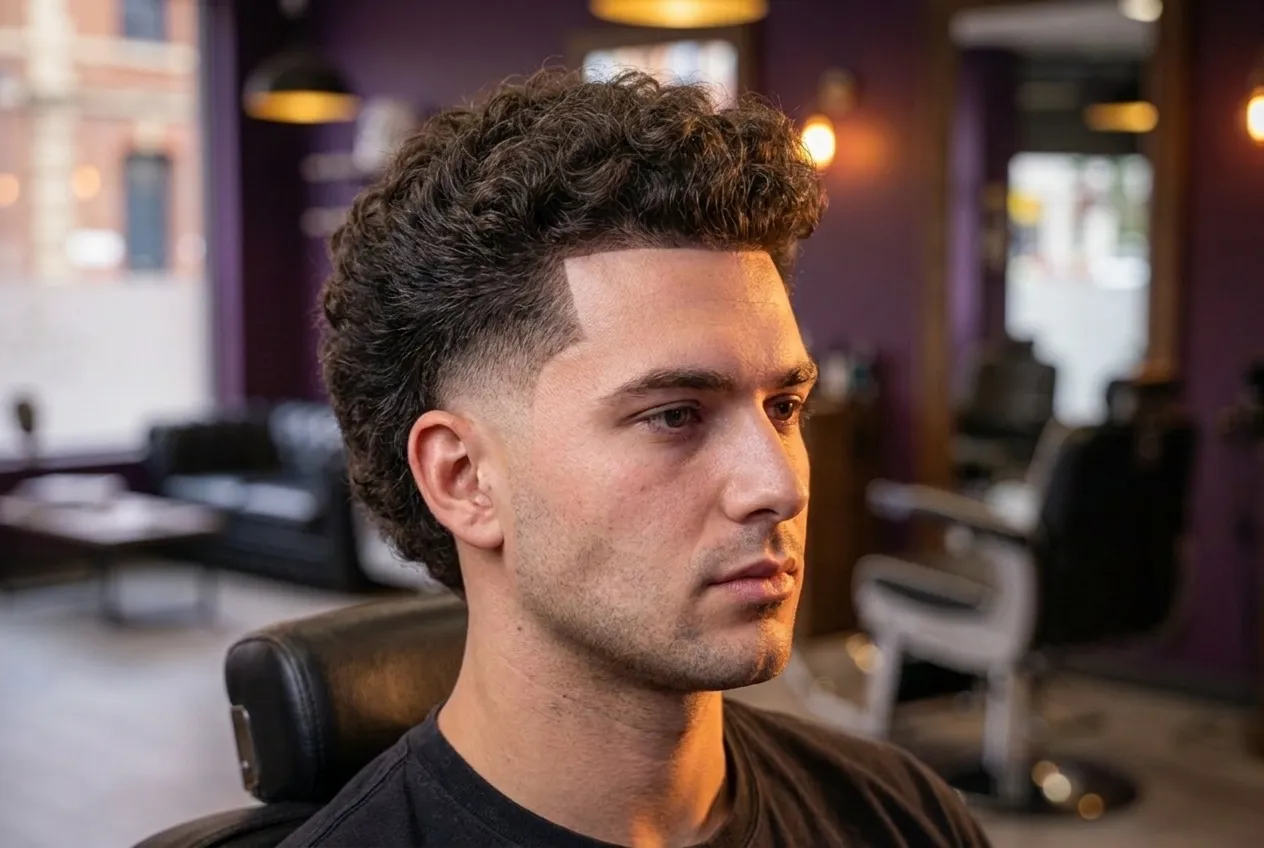
A temple fade is the focused fade: it touches only the temples and the ear line, leaving all the length and volume on top and in back — precise cleanup exactly where it's needed, without giving up a single extra centimeter.
How much it costs: A men's haircut at our Ramat Gan shop starts at ₪90 (includes consultation and a personal fit). Fade, skin fade and taper are all included in the men's haircut price; adding a beard or a scissor cut is priced separately. See the full price list
What is a Temple Fade?
A temple fade (named after the temples), sometimes called a temp fade or a "Brooklyn fade," is the most focused variation in the fade family. Unlike a regular fade that wraps the whole head, the temple fade grades only a small, defined area: the temples, around the ears, and sometimes a thin strip along the side line. Everything else — the top, the nape and most of the sides — stays at full length. It is, in effect, the way to get the cleanliness and sharpness of a fade without giving up volume.
The style has its roots in the curly and afro hair world, where the goal is to preserve the height and texture of the hair while still tidying the perimeter — and the temple fade does exactly that. In recent years it's gone well beyond that to become a popular choice for anyone who wants a tidy, minimalist cut: a student who wants a clean look without commitment, a guy who likes his hair long but wants neat edges, or someone who simply prefers a subtle change. The contrast in a temple fade is local — it happens only around the temple — so it feels natural rather than dramatic.
What makes a temple fade worth the visit? Precisely because the area is small, there's no room for mistakes: the transition has to be perfectly smooth within a tiny space, and the line-up around the temple and ear has to be clean and symmetrical on both sides. When the work is precise, the temple fade does something clever — it frames the face and sharpens the gaze without changing the amount of hair you're used to.
Who does the Temple Fade suit?
The temple fade is a dream for three groups. The first: men with curly, wavy or afro hair who want to keep the volume and height up top and just tidy the edges — no style respects natural texture more. The second: anyone who likes his hair relatively long but wants it to look groomed rather than messy — clean temples make all the difference. The third: anyone after the lowest commitment in the fade world — because you're only changing a small area, the change is subtle and reversing it is easy. As for face shape, the clean temples sharpen the jawline and open up the gaze, so it flatters almost everyone; it also pairs beautifully with a beard, since you can connect the temple grade into the beard as one continuous line. Anyone after dramatic contrast or wide exposure at the sides will get that from a regular fade or a skin fade instead; the temple fade is the opposite — subtle, focused and conservative in just the right measure.
Temple Fade variations worth knowing
Classic Temple Fade
The basic version: a short, clean grade at the temples and the ear line only, with all the rest of the hair left full. Tidy, minimalist, and perfect for anyone who wants the lowest commitment — a change you feel but can barely see where it came from.
Temple Fade with a Line-Up
The temple grade is paired with a sharp graphic line around the front hairline and temples. The line-up turns the subtle style into a precise frame for the face, and it's the detail that gives the temple fade its modern "barbershop" touch. It needs more frequent refreshing, since a straight line escapes fast.
Temple Fade for Curls & Afro
The pairing the style was born from: full height and volume of curls or an afro up top, over clean, graded temples. It preserves all the natural texture and just tidies the perimeter — one of the most flattering solutions for hair with a lot of character.
Temple Fade with a Beard
Connect the temple grade into the beard as one continuous line, so there's no seam between hair and beard. The result is a unified frame that wraps the face — an especially groomed look for anyone growing a beard who wants everything to read as one piece.
Temple Fade with a Taper at the Nape
A variation that adds a subtle taper at the nape too, not just at the temples. This gets you clean edges all around while keeping the length and volume on top — a nice middle step for anyone who wants a bit more cleanup without going to a full fade.
Skin fade vs. fade vs. taper vs. zero
| Style | How short at the sides | Contrast | Upkeep frequency | Best for |
|---|---|---|---|---|
| Skin fade | Down to bare skin (zero) at the bottom | Maximum — sharp and dramatic | Every 1–2 weeks | Anyone who loves a clean, sharp look and is up for frequent touch-ups |
| Regular fade | Graded to a low guard (1–2), not to skin | Medium–high | Every 2–3 weeks | Most men — a balance of sharpness and flexibility |
| Taper | Gentle shortening at the temples and nape only | Subtle and understated | Every 3–4 weeks | Conservative settings, or anyone wanting a tidy look that lasts |
| Buzz / zero | One even short length all over | None — uniform length | Every 1–2 weeks (hairline) | Minimal upkeep and an understated look |
The Temple Fade from our chair
Real client results — this is how it looks when you leave our shop in Ramat Gan.


How to keep it sharp between cuts
There's a small paradox worth knowing here: precisely because the temple fade touches only a small area, its edges need frequent attention. The line-up at the temples and the grade around the ears are the first to lose their sharpness, and within a week or two the small, precise area starts to blur — while the rest of the long hair barely changes. So anyone keeping a sharp line-up will want to refresh the edges every two weeks, even without touching the top. The good news: the refresh itself is short and quick, because you're only working on a limited area.
At home, most of the care is on the long top — according to your hair type: a curl cream or mousse for curls, or a little wax/clay for straight hair. The edges themselves are best left to professional hands; a straight, clean temple line depends on precise symmetry between the two sides, and that's exactly the part that's hard to achieve in front of a mirror at home. A few minutes in our chair keep the frame far sharper than any DIY attempt.
The Temple Fade in Ramat Gan
The temple fade is a reminder that sometimes less is more — and that even a "small" haircut takes a precise hand. At 7 Rashi St in Ramat Gan we work that small area as seriously as a full fade: a smooth transition within a tight space, a symmetrical line-up on both sides, and a clean connect into the beard for anyone who wants it. It's the perfect solution for anyone who loves his hair long but wants it to look groomed — and also for a quick refresh between full haircuts. A short Calmark booking, five to fifteen minutes in the chair, and you walk out with sharp edges without giving up a centimeter up top.
Temple Fade — questions & answers
What's the difference between a temple fade and a regular fade?
A regular fade grades the whole perimeter of the head — sides and nape — creating an overall contrast between short and long. A temple fade grades only a small area: the temples and around the ears, while the rest of the hair stays full. In short: a regular fade is a total change, a temple fade is a focused touch that keeps your volume.
Does a temple fade suit curly or afro hair?
Absolutely — that's actually where the style came from. It's designed to preserve all the height and texture of curls or an afro and just tidy the perimeter at the temples. It's one of the most flattering solutions for high-volume hair, because it cleans the edges without touching what you love about your hair.
How often does a temple fade need refreshing?
The area is small but escapes fast: if you have a sharp line-up at the temples, it's worth refreshing the edges every two weeks, even without touching the top. If you're without a line-up and prefer a softer look, you can stretch it to 3–4 weeks. The refresh itself is short, since you're only working on a limited area.
Can a temple fade be combined with a beard?
It's even recommended. You can connect the temple grade directly into the beard as one continuous line, so there's no seam between hair and beard and the face gets a unified, groomed frame. We'll happily coordinate that together with beard design in a single appointment.
How much does a temple fade cost?
A temple fade falls under the men's haircut service, and the exact price is shown when you book on Calmark, before you confirm. A full overview of all services is on the pricing page.
Related styles worth knowing
Each style gets its own guide here — and if you want the real thing, the service page is waiting.
Want a Temple Fade? Let's talk
Booking on Calmark takes less than a minute — pick a service and time, and arrive relaxed at 7 Rashi St, Ramat Gan.