Razor, Clippers, or Scissors? The Complete Guide to the Differences Every Man Should Know
Products & Hair Styling9 min read
Straight to the Point: Why the Tool in Your Barber's Hand Sets the Rules of the Game
You walk into the barbershop, settle into the chair, and the barber asks, "What are we doing today?" If your answer is "the usual" or "do whatever you think looks good," you're essentially handing over 100% of the final result to him. There's nothing wrong with that, especially if you trust him, but a basic understanding of the tools he's about to use can completely change the game. The difference between clippers, scissors, and a razor isn't just technical; it's the difference between a good haircut and a precise one that reflects exactly the look you wanted to achieve. Knowing the tools gives you the language and the power to communicate your vision, understand your barber's suggestions, and take an active part in the process. After all, beyond the tool itself, the skill of the hairstylist is what determines the quality of execution, but your understanding determines your satisfaction.
The Barber's Arsenal: Breaking Down the Three Core Tools
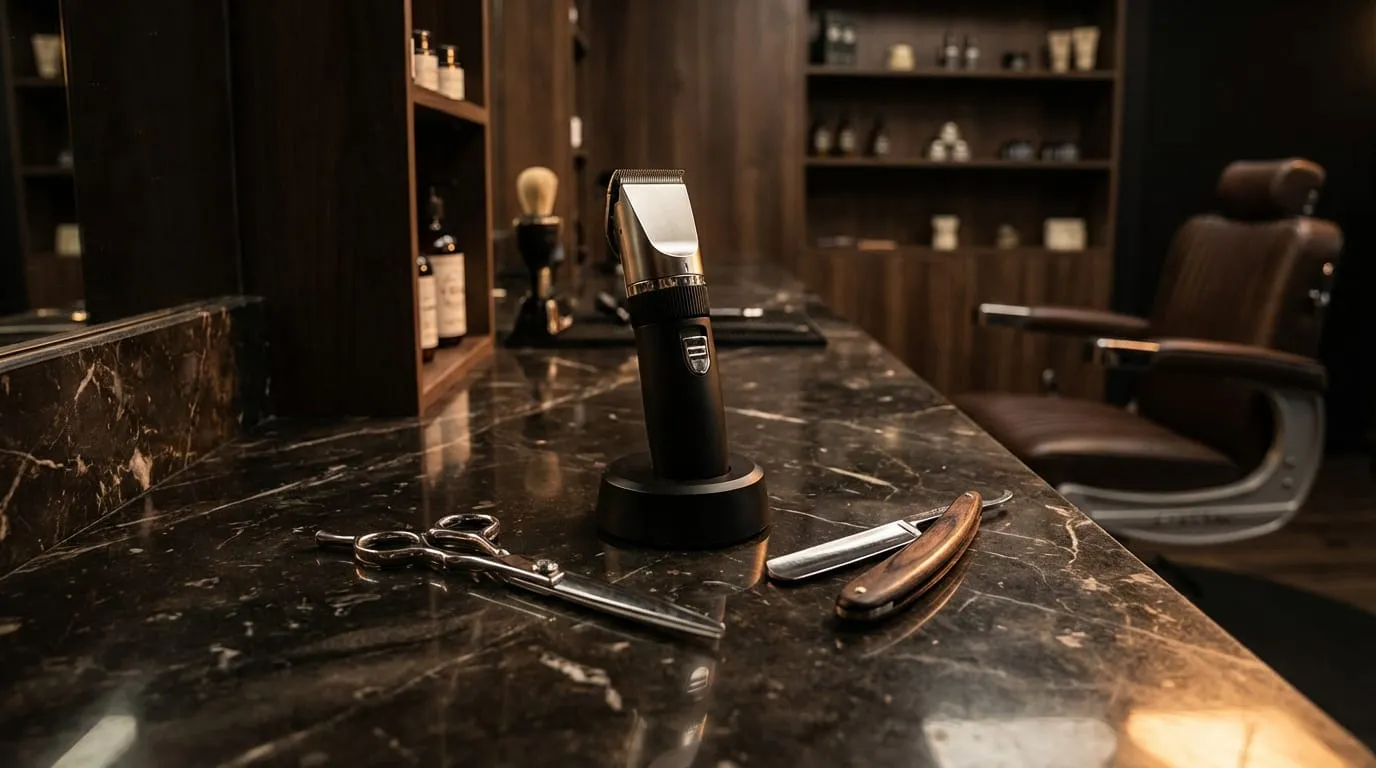
It's important to understand that a professional barber almost never uses just one tool. The final result is always a synergy of several tools, each chosen for a specific purpose. Every tool has a role, distinct advantages, and limitations too. Let's break down the starting lineup and understand what each one does, and when it comes into play.
Clippers: The Power of Precision and Speed
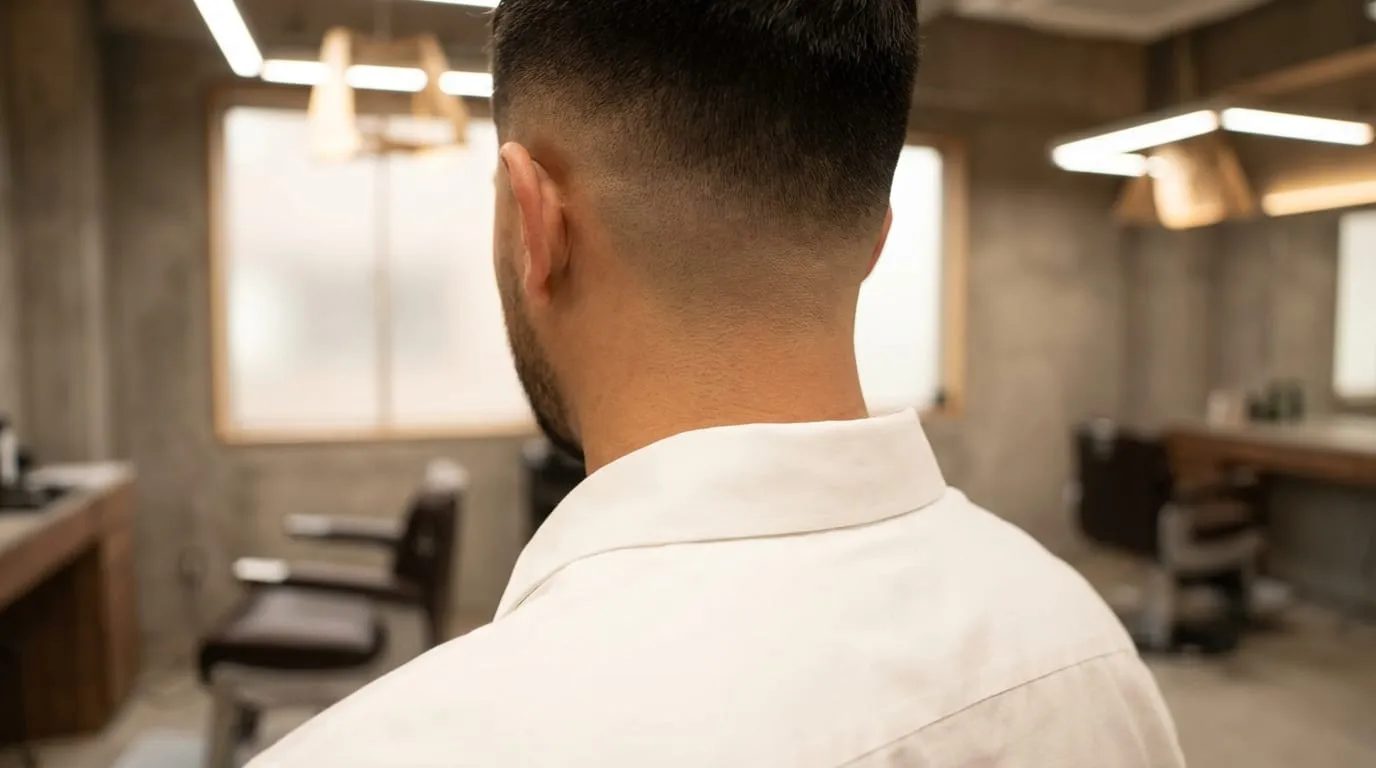
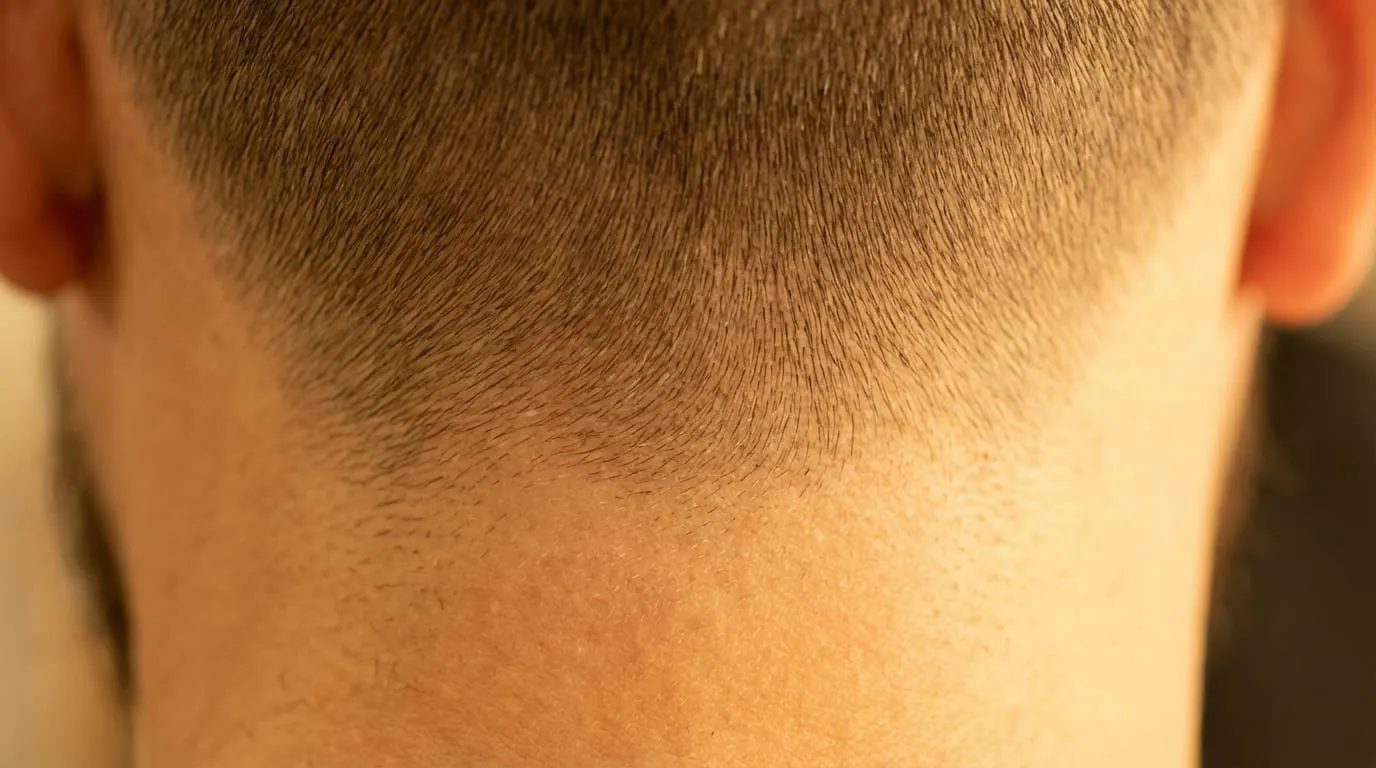
The clippers are the workhorse of any modern barbershop. They're the primary tool for creating a clean base, removing significant volume quickly, and crafting the precise fades that have become the signature of so many men's haircuts. They work by using blades that move at very high speed over a plastic or metal comb (a "guard"), which determines the cutting length. This is the ideal tool for short, cropped haircuts and for shaping the sides and nape professionally.
-
When do we use them? Mainly for creating fades of all kinds (High, Mid, Low Fade), for uniform buzz cuts, and for quickly removing hair on the sides of the head and the nape to create a clean frame for the haircut.
-
Advantages: Unmatched efficiency and speed, the ability to create perfect uniformity in hair length, and the ultimate tool for crafting clean, sharp geometric lines at the nape and sideburns.
-
Disadvantages: Clippers offer fewer options for playing with texture and softness. Relying solely on clippers can create a "stiff" or "military" look if it isn't properly combined with scissor work meant to soften the transitions.
Scissors: The Art of Texture and Movement
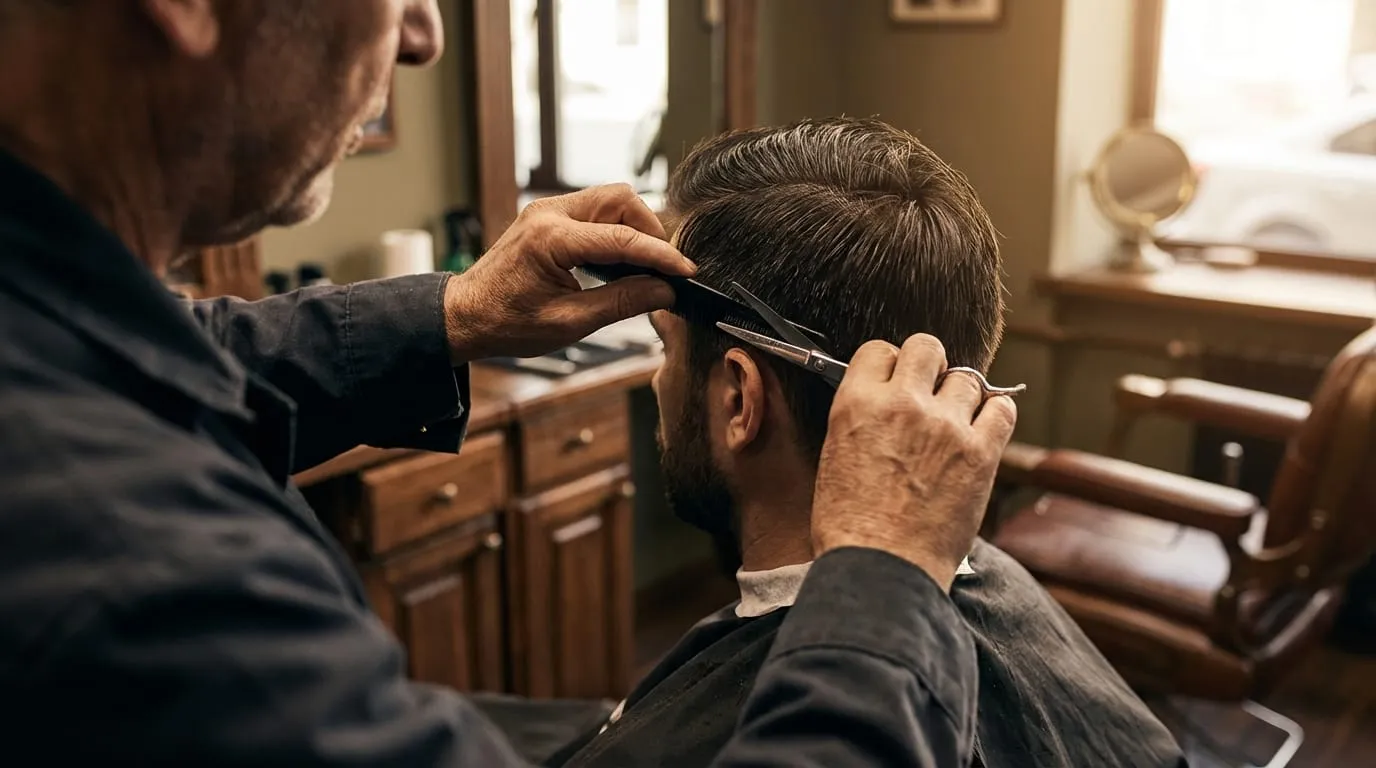
If the clippers are the workhorse, the scissors are the artist's brush. This is the classic, traditional tool that allows the barber to "sculpt" the hair individually. Unlike clippers, which cut to a uniform length, scissors allow full control over each section of hair, creating layers, controlled thinning, and adding movement and softness. They're essential for working with medium to long hair, and for the final, personal finish of nearly every haircut.
-
When do we use them? Almost always for shaping the top of the head, for creating layers that add volume or movement, for a soft, harmonious blend between the short sides and the longer top, and for giving the haircut a subtle, natural finish.
-
Advantages: Absolute control over the result, the ability to create a natural, soft, flowing look, and full personalization to the head shape, hair growth patterns, and the client's specific hair type.
-
Disadvantages: The process is significantly slower and more deliberate compared to clippers. It demands a very high level of skill and precision from the barber to achieve a symmetrical, high-quality result.
Razor: The Secret Weapon for Tapered Ends and a Bold Finish
The razor, or the straight razor dedicated to haircutting, is an expert's tool designed to create specific effects. It isn't used for removing length overall; instead, it "glides" over the hair to create unique texture, fine, tapered tips (wispy ends), and an overall look that's intentionally "messy." In addition, it's often used to clean up the nape line and sideburns with shave-level precision.
-
When do we use it? To add wild, modern texture to short-to-medium haircuts, to soften the ends of thick, heavy hair, and to give the hairline at the nape and around the ears a clean, sharp finish.
-
Advantages: Creates a unique texture that can't be achieved with scissors or clippers, gives the hair plenty of movement and lightness, and allows for an especially smooth finish at the ends.
-
Disadvantages: Using a razor isn't suitable for every hair type. On fine, delicate, or curly hair it can cause damage and create a frizzy look or split ends. It demands the highest level of expertise from the barber to control the depth of the cut and avoid damaging the hair.
Quick Comparison Table: Clippers vs. Scissors vs. Razor
To help you make a quick decision and picture the result, here's a direct comparison showing the strengths and purposes of each tool. Remember, the perfect haircut usually combines two or all three of them.
| Feature | Clippers | Scissors | Razor |
|---|---|---|---|
| Primary purpose | Removing volume and fades | Shaping and texture | Aggressive texture and finish |
| Type of result | Sharp, uniform, clean | Soft, natural, layered | Tapered, light, "wild" |
| Ideal for | Short cuts and fades | Medium to long hair | Straight to wavy hair, modern styles |
| Texture level | Low | High | Very high |
| Working speed | Fast | Slow and precise | Medium |
How Do You Choose? Your Guide to the Next Conversation With Your Barber
The secret to a great haircut lies in communication. Instead of focusing on a specific tool, focus on describing the desired result. Understanding the tools will help you grasp the process the barber will follow to achieve that result. Use the following examples to translate your wishes into professional language your barber will understand right away:
-
"I want a clean, high fade": When you say this, you're essentially asking for intensive clipper work. The barber will start with a low guard at the sides and nape and work his way up, switching guards to create a gradual, smooth transition. The top, which will stay longer, will be shaped and blended into the fade with scissors to avoid a "bowl" look and create a harmonious finish.
-
"I want to keep the length on top, but add volume and movement": This is a classic request for almost exclusively scissor work. The barber will use various cutting techniques (point cutting, layering) to create invisible layers that give your hair body and movement without shortening it significantly. He may use clippers with a high guard only to gently clean up the nape line and sideburns.
-
"I'm looking for a more 'messy' and effortless look": This is where the winning combination of scissors and razor comes in. The barber will likely use scissors to set the overall length, then go over the ends of the hair with a razor to create a rough, tapered texture that gives you the "alive," effortless look you're after.
-
The golden tip: The most effective and reliable way to communicate what you want is simple: a photo. Find a picture of a haircut you love, one that suits your hair type, and show it to your barber. Instead of trying to describe it in words, ask him directly: "This is the look I want. Which tools will you need to use to get us there?" This question opens a professional dialogue and shows him that your understanding runs deeper.
Questions & Answers
**Does a razor cut damage the hair?**When it's performed by a skilled professional on the right hair type (usually straight, thick hair), it won't damage the hair. In fact, it can give it lightness and movement. However, improper use, a dull blade, or use on hair that's too fine and delicate can damage the hair's outer layer (the cuticle) and cause split ends or a damaged look.**What's the difference between a clipper fade and a scissor fade (scissor over comb)?**A clipper fade creates a sharper, more precise and defined transition between different hair lengths, and it's ideal for modern, high-contrast "fade" looks. A scissor-over-comb fade is a classic technique that creates a softer, more natural, more graduated look. The transition is less dramatic, and the result is a classic finish that blends more subtly into the top of the hair.**Can I ask for a scissors-only haircut?**Absolutely. This is a common request for men with medium to long hair, or those who prefer a softer, more classic look without the sharp, cropped lines of the clippers. A full scissor cut allows complete personalization to the head shape and usually looks more natural as the hair grows back.How do I know which tool suits me best?
The answer depends on three main factors: 1. The desired result: Do you want a sharp, clean look or a soft, flowing one? 2. Your hair type: Thick, straight hair responds differently to the tools than fine, curly hair does. 3. A professional consultation: The most important factor. A professional barber you trust will know how to assess your hair, listen to your wishes, and recommend the right combination of tools and techniques to bring your vision to life.
In conclusion, knowing the differences between clippers, scissors, and a razor turns you from a passive client into an active partner in shaping your own look. The next time you sit down in the chair, you won't just know what to ask for — you'll also understand the art and technique behind the result. The ability to hold a professional conversation with your barber is the key to a haircut that's not just good, but perfect for you. For more on maintaining your fresh look, you can find more tips for men's hair grooming in the leading magazines.
Want this on your own head?
Our team at 7 Rashi St, Ramat Gan is waiting for you — booking online takes less than a minute.