Beard Grooming at the Barbershop: The Complete Guide to a Sharp, Clean Beard Line That Lasts
Beard & Grooming11 min read

A beard is far more than just facial hair. It's a statement. And for the modern, busy man in Ramat Gan, whose time is precious and whose appearance matters, the difference between a well-groomed beard and a neglected one is critical. The key to that difference isn't the length of the beard or its density — it's the precision of its lines. Beard grooming at the barbershop isn't a luxury; it's a smart investment in a sharp, professional, and symmetrical look. In this guide we'll dive deep and understand how to build a clean beard line that lasts, why it's best to leave the work to the pros, and how you can maintain that stunning result at home.
Why a Professional Beard Line Is a 'Game Changer' (and Why DIY Attempts Usually Fail)
Let's be direct: there's a huge gap between a beard line drawn by a barber's skilled hand and a home attempt with a vibrating trimmer in front of the bathroom mirror. The DIY result will usually be a line that's too soft, uneven, or worse — asymmetrical. By contrast, a sharp, clean, geometric beard line done at the barbershop is a true 'game changer.' It works like a frame around a picture: it frames the face, sharpens the jawline even when it isn't naturally defined, and creates the illusion of a stronger facial structure. For the professional, the entrepreneur, or any man who appreciates aesthetics, this look instantly conveys confidence, order, and precision — qualities that are highly valued in the business environment of the stock exchange district in Ramat Gan.
It's important to understand the fundamental difference between 'tidying up' and 'building.' When you try to shape your beard at home, you're usually 'tidying' it — taking a bit off here and there, trying to straighten an existing line. At the barbershop, the process is 'building.' The barber doesn't just trim; he builds a correct geometric foundation for you, one that takes into account your unique facial structure, the shape of your skull, and the growth directions of your hair. That foundation is what allows you to maintain the beard easily between visits, because all you need to do is shave the stubble that grows outside the precise frame already built for you. Trying to build that foundation yourself, without the tools, the angle, and the experience, is an almost certain recipe for failure and frustration.
Anatomy of a Perfect Beard Line: What Is Your Barber Really Doing?
Professional beard grooming isn't a matter of arbitrariness. It's a precise art based on an understanding of facial anatomy. When your barber gets to work, he analyzes three main contour lines that together create the overall shape of the beard. Understanding these lines will help you not only appreciate his work, but also communicate with him better about the style you want. The goal is to show that there's a science behind the craft, and that the final result is the product of careful planning and execution.
- The Cheek Line: This is the upper line of the beard, running from the sideburns toward the mustache. Here the choice is between a more natural, rounded line and a straight, sharp one. There's also a decision about the height of the line. A higher line, closer to the cheekbones, can create a fuller, richer look. A lower line can suit men with rounder faces, since it elongates them and creates the illusion of a narrower structure. An experienced barber will know how to match the angle and height of the line to your specific facial structure.
- The Neckline: This is where the most common mistake in DIY grooming happens — shaving too high, too close to the jawline. The result is the unnatural look of a 'floating beard.' The guiding professional rule is the 'two-finger rule': the ideal neckline should sit about two fingers above the Adam's apple. A correctly positioned neckline is critical; it defines the lower boundary of the beard, prevents a messy 'neck beard' look, and gives sharp, clear definition to the jawline — which significantly improves the entire profile.
- The Lip Line: This is the small detail that makes a big difference. A clean, precise mustache line that doesn't cover the upper lip is a hallmark of a well-groomed beard. A professional barber will use scissors or a fine trimmer to ensure the mustache is the right length and keeps a clean line, giving a neat, aesthetic look — especially while eating and speaking.
Behind the Scenes: The Pros' Tools and Techniques
One of the main reasons you can't reproduce a barbershop result at home is the arsenal of tools and the complete mastery of the techniques for using them. Understanding these tools will build your trust in the barber and clarify why the investment pays off. It's not just a matter of a better blade, but of a whole tool system in which each one plays a dedicated role in the process of building and shaping.
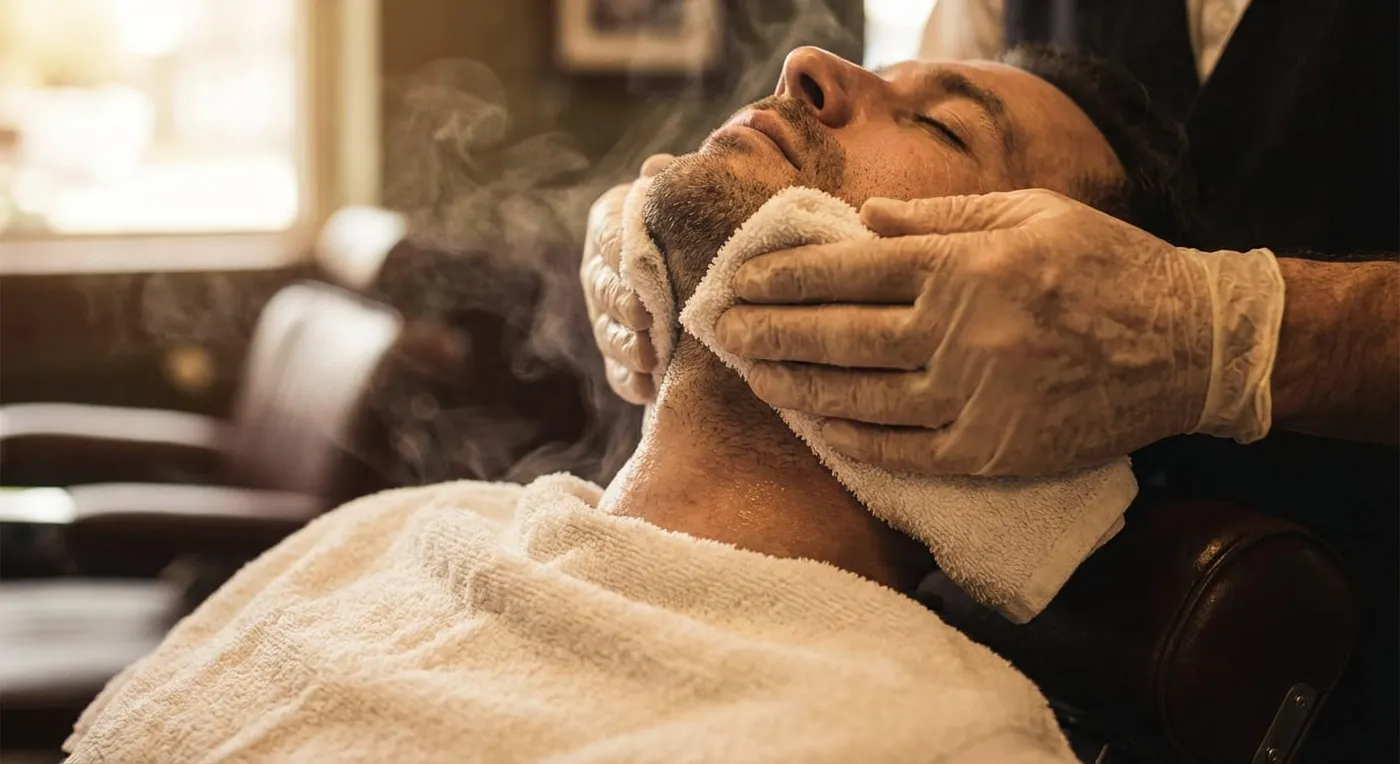
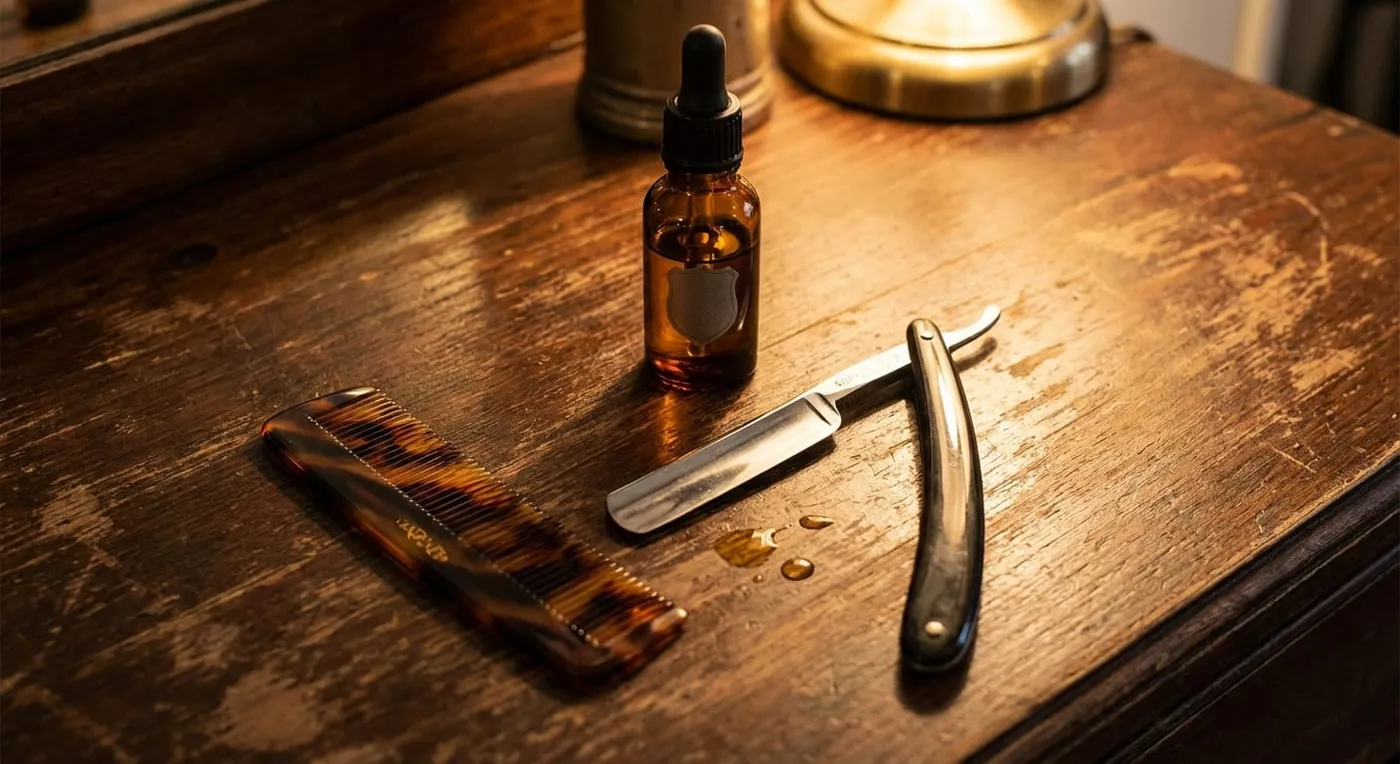
- Straight Razor: This is the ultimate tool for getting completely sharp, clear lines. Unlike a home razor with multiple blades, the single-blade straight razor allows the barber surgical precision when drawing the lines on the cheeks and neck. Its advantage is the ability to shave very close to the skin and create a perfectly clean edge, which keeps the line defined and sharp for much longer. The prep stage, which usually includes placing a hot towel on the face to open the pores and soften the skin and hair, makes the shave smoother and prevents irritation.
- Clippers and Trimmers: These are the 'workhorses' of beard grooming. The main clipper is used to reduce the overall bulk of the beard and to set the desired length uniformly. Trimmers, which are smaller and more precise, are used to create the initial contour lines of the beard (on the cheeks and neck) before the final finish with the straight razor. They're also essential for creating fades and smooth transitions.
- Scissors: While the machines do the rough work, scissors are the finishing and precision tool. A skilled barber will use scissors to handle stray, stubborn hairs that grow in different directions, to shape the mustache precisely above the lip, and to make subtle corrections to the overall shape of the beard that can't be done with a machine.
- The Fading Technique: This is an advanced technique that distinguishes basic beard tidying from professional, polished grooming. The barber uses a clipper with blades at different heights to create a gradual, smooth transition from very short or shaved hair in the sideburn area along the full length of the beard. A proper fade connects the haircut to the beard as one harmonious unit, creating a modern, clean, and professional look.
Keeping the Results: How to Maintain the Beard Line Between Visits
You went to the barber and walked out with a sharp, perfect beard line. The goal now is to keep that look for as long as possible. Proper maintenance at home will not only extend the life of the professional grooming, but will also save you money and time in the long run. This part is your practical guide to keeping a beard line that lasts, step by step, without the guesswork.
Winning Tip: The 90/10 Rule
Think about your beard grooming in terms of 90/10. 10% of the work is the initial building and full shaping done by the barber. The remaining 90% is the easy, daily maintenance you do at home. If you invest a minute or two every morning in maintenance, you can stretch that 10% of professional work for many weeks.
- Must-have gear: The most important thing is to invest in a quality finish trimmer (Detailer). Not a big clipper, but a small, slim trimmer designed for lines and details. It's worth emphasizing: this tool is meant for maintenance only — that is, to shave the small stubble that grows outside the line. It's not meant for trying to create a new line or fix mistakes. Using it incorrectly can ruin all of the barber's work.
- Morning routine (every 1-2 days): The key is consistency. Every morning or two, after the shower when the skin is soft, stand in front of the mirror and use the trimmer to gently remove only the new growth. On the cheeks, shave downward everything that grows above the sharp line the barber set. Below the neckline, shave upward everything that grows beneath the bottom line. Don't try to 'improve' the line itself — just clean around it.
- Nourishing and moisturizing: Frequent shaving, even with a trimmer, can dry out the skin. That's why it's important to add a quality beard oil or balm to your routine. After cleaning up the stubble, drip a few drops of oil onto your palms, massage it well into the facial skin beneath the beard, and then spread the rest over the beard hair itself. This will prevent irritation, soothe the skin, and keep the beard hair healthy and soft.
- Combing and shaping: Don't underestimate the power of daily combing. Using a dedicated beard comb (preferably wooden, to prevent static electricity) helps 'train' the hairs to grow in the desired direction, prevents tangles, and maintains the overall shape of the beard. Regular combing also helps distribute the skin's natural oils (or the beard oil you added) evenly along each hair.
Questions & Answers
Even after these detailed explanations, it's natural to have more questions. We've gathered here the most common questions we hear from clients, with direct, practical answers that will help you arrive at the barber more prepared and confident.
How often should I refresh the beard line at the barber?
The answer depends on your personal hair growth rate and how diligent you are with home maintenance. In general, the recommendation is: a line maintenance and touch-up every two to three weeks. In a visit like this, the barber will sharpen the existing lines and clean up the growth around them. A full reshape, including trimming and shaping the form, is recommended every 4 to 6 weeks.
How do I ask the barber for the style I want?
Communication is key. The best and most effective advice is simply to bring reference photos. Find 2-3 photos online of beards you like, on men with a facial structure similar to yours. This gives the barber a clear visual starting point. In addition, don't hesitate to consult with him. A good barber is also an advisor. He understands facial structure and can honestly tell you whether the style you chose will flatter you, or suggest adjustments that will make the result look even better.
Does beard grooming hurt or cause irritation?
In professional hands, the process shouldn't hurt at all. Using a hot towel before the straight-razor shave softens the skin and hair, and proper technique with a sharp razor ensures the shave is smooth and tug-free. In the case of very sensitive skin, there may be slight irritation or mild redness right after the treatment, but it should pass quickly. Using a quality, soothing aftershave at the end of the process helps minimize the risk of irritation.
Which is better, a sharp line or a natural line?
This is entirely a stylistic choice that depends on you and your lifestyle. A sharp, straight line (Sharp Line) conveys a polished, neat, and intentional look. It's especially suited to a business environment, salespeople, and anyone who wants to convey professionalism and precision. A natural line (Natural Line), which follows the hair's natural growth line, conveys a relaxed, easygoing, and less formal look. It can suit someone who works in a creative environment or simply prefers a less 'done' look. Your barber can help you match the type of line to your personality and lifestyle.
Summary: A Small Investment, a Big Result
At the end of the day, a regular visit to a professional barber for beard grooming isn't an expense — it's an investment. It's an investment in your look, in your self-confidence, and in the impression you make. A clean, precise beard line is a seemingly small detail, but it has an enormous impact on your overall appearance. By entrusting the task to a professional and using simple, consistent home maintenance, you can ensure your beard always looks its best — sharp, clean, and ready for any business meeting or social event that comes your way.
Want this on your own head?
Our team at 7 Rashi St, Ramat Gan is waiting for you — booking online takes less than a minute.