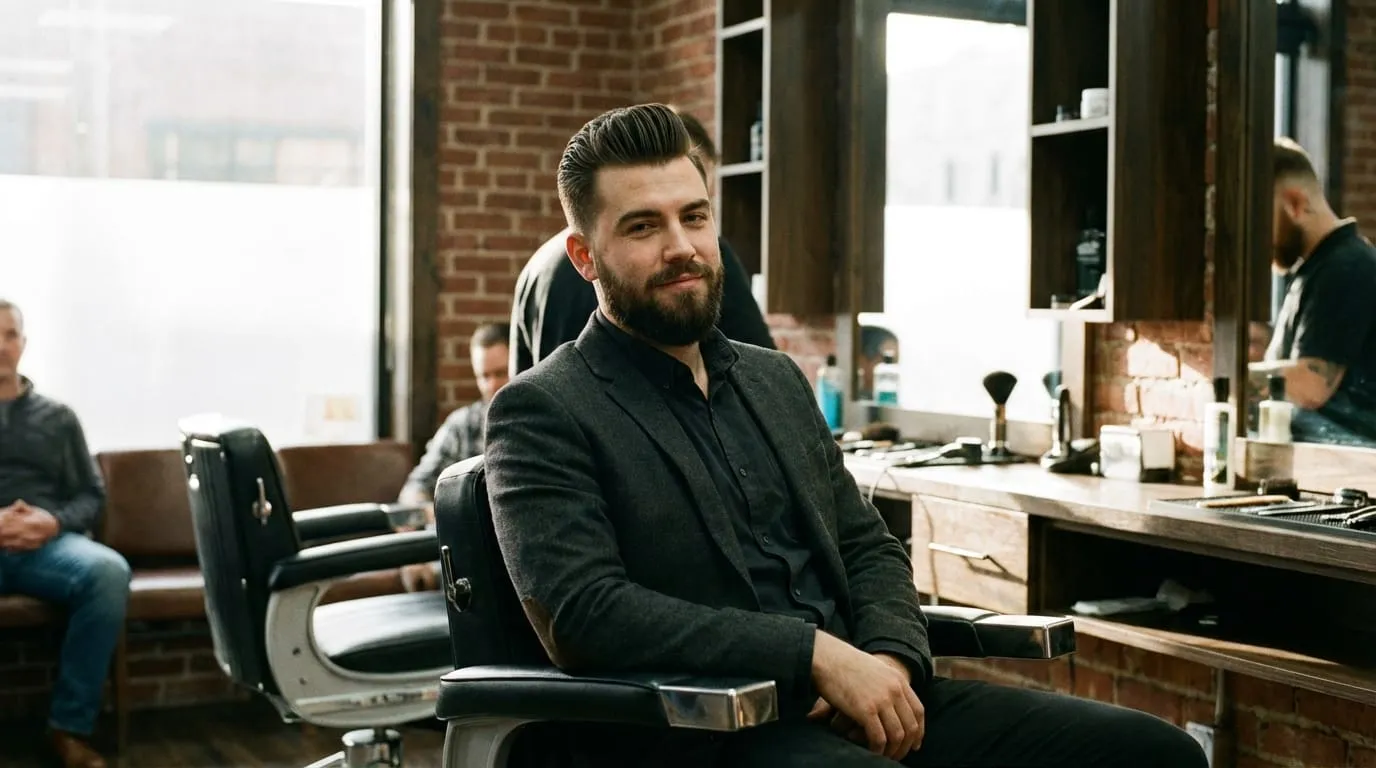
How to Choose a Beard Style by Face Shape: The Complete Guide for the Modern Man
Beard & Grooming7 min read

Why Your Face Shape Is the Key to the Perfect Beard
Let's get real. A beard isn't just facial hair, it's a strategic tool for sculpting your face. Matching the right beard style to your face shape is the difference between a random look and a precise, professional, and impressive one that radiates control. A basic understanding of your proportions lets you accentuate your strong features and downplay the weaker ones, exactly the way a tailored suit upgrades your silhouette. Throughout history, men have used the beard to project authority, wisdom, or style, and there's a lot to learn from the history of beard grooming to grasp the power it holds. Our goal isn't just to grow a beard, but to use it to create the best version of yourself.
Step 1: Identifying Your Face Shape (in 60 Seconds)
No measuring tape or geometry degree required. To figure out your face shape, stand in front of the mirror and answer two simple questions. First, what is the widest part of your face: the forehead, the cheekbones, or the jawline? Second, what is the shape of your chin: round, square, or pointed? The answers to these questions will easily place you in one of the main categories and give you the starting point for the question that really matters: which beard suits me?
The Main Face Shapes:
- Oval Face: Considered the most ideal and balanced face shape. The length of the face is noticeably greater than the width of the cheekbones, and the forehead is slightly wider than the jawline. The chin is gently rounded. If this is you, you won the beard genetic lottery.
- Square Face: A strong, masculine face shape, characterized by sharp angles. The length of the face, the width of the forehead, the cheekbones, and the jaw are nearly equal. The jawline is prominent and angular, and the chin is relatively broad.
- Round Face: The main feature is the absence of sharp angles. The length and width of the face are very similar, with a soft, rounded jawline and chin. The cheekbones are usually the widest part.
- Oblong/Rectangle Face: An elongated version of the square face. The face is significantly longer than it is wide, with a relatively straight line running from the forehead, through the cheekbones, down to the jaw.
- Diamond Face: A less common but very striking face shape. The cheekbones are the widest and most dominant part, while the forehead and jawline are narrower. The chin is usually pointed.

Step 2: Matching the Beard Style to Your Face Shape
Now, after you've identified your face shape, it's time for the practical part. The goal is to use the beard to create the illusion of an oval, balanced face. Every style you choose is meant to serve a purpose: to add length, add width, soften angles, or accentuate them. This is the heart of the article, and here you'll find the precise recommendations for you.
Recommendations for an Oval Face
As noted, an oval face is considered the ideal of symmetry, so most beard styles will flatter you. The key here is not to ruin the natural balance. A Short Boxed Beard is an excellent choice that maintains the clean lines of the face and emphasizes the jaw. Another style is Stubble (a few days' growth), which delivers a rugged yet well-kept look. Avoid beards that are too long and pointed at the chin, which can over-lengthen the face and break the perfect proportion.
Recommendations for a Square Face
With a strong, angular jaw, your goal is to soften the sharp lines and create the illusion of a slightly longer face. A Goatee is a classic option that works great, because it draws attention to the center of the face and lengthens the chin. Another option is a fuller beard, but one styled with more rounded lines in the cheek area. Keep the hair on the sides (the cheek hair) relatively short and let more length and volume build up around the chin. This creates a vertical line that balances the prominent width of the jaw.
Recommendations for a Round Face
Here the mission is clear: create the illusion of a longer, narrower face, and add definition and angles where they're missing. The secret is to keep the sides very short and focus on length around the chin. A Van Dyke beard, which combines a mustache and a goatee that don't connect, is a bold and sophisticated choice that achieves exactly that. A Balbo beard, which is a full beard without cheek hair and with a separated mustache, will also do an excellent job. What's important to avoid? Full, bushy sides (mutton chops) or a full beard of uniform length, which will make your face look even rounder and wider.
Recommendations for an Oblong Face
If you have a long face, the goal is the opposite of a round face: you want to avoid adding more length and instead create the illusion of width. The best way to do this is to grow a beard that's fuller on the sides, in the cheek area, and shorter around the chin. This style "fills out" the lower part of the face and creates a wider, more balanced look. Dense stubble or a short full beard will work great. Avoid at all costs long, narrow beards at the chin, like a long goatee, which will emphasize the length of the face and make it look even more elongated.
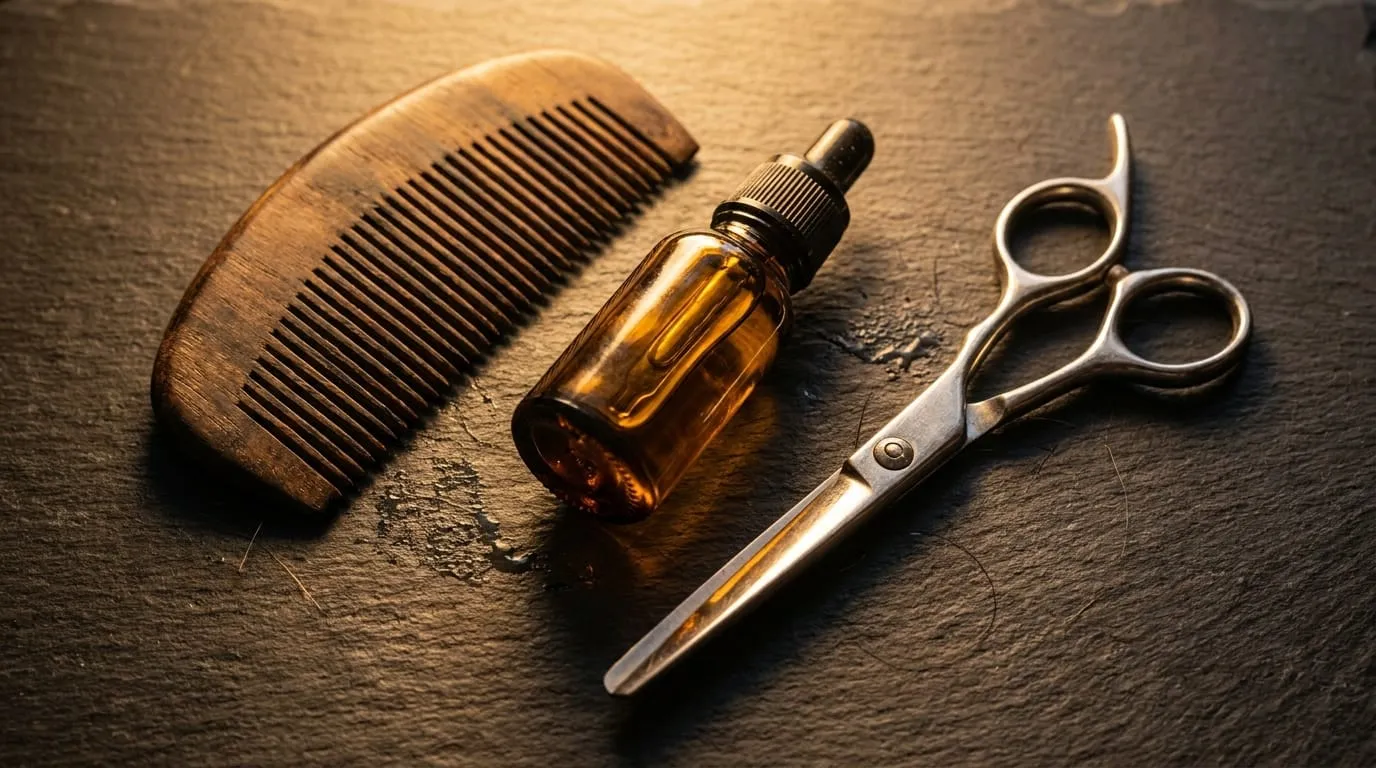
Beyond the Style: Maintenance Tips for a Professional Look
Choosing the right style is only 50% of the work. The remaining 50% is ongoing maintenance. A beard, no matter how well styled, will look unkempt and unprofessional without proper grooming. Luckily, it doesn't take much time, just the right tools and habits. If you want to dig deeper, you can find more information in international styling guides.
- Shampoo and Conditioner: Beard hair is different from the hair on your head, it's coarser. Use a dedicated beard shampoo and conditioner that clean it without drying out the skin underneath. Washing two or three times a week is enough.
- Oil and Balm: This is a critical step. Beard oil nourishes the skin, prevents itching and dandruff, and softens the beard hair. Balm does all of that and also contains a light wax that helps style and control unruly hairs. Use a few drops of oil in the morning, or a little balm if you need to shape the beard.
- Combing and Styling: Investing in a small comb or beard brush is a must. Daily combing (on a dry beard) helps untangle knots, distributes the oil/balm evenly, and trains the hairs to grow in the desired direction.
- Trimming and Precision: The key to a professional look is clean lines. Use a trimmer or razor to define the neckline (usually a finger or two above the Adam's apple) and the cheek line. Do this at least once a week to keep a sharp, tidy look.
Questions & Answers (the ones you don't have time to ask)
How often should you tidy up the beard's outlines?
For a sharp, professional look, the kind that fits a stock-trading work environment in Ramat Gan, we recommend tidying up the neck and cheek lines every 3-4 days. It takes two minutes and changes the entire look. A full trim of the beard's length can be done every 1-2 weeks, depending on your personal growth rate and the style you've chosen.
Is a full beard appropriate for an office work environment in the city center?
Yes, absolutely. The notion that a beard is unprofessional belongs to the past. Today, a well-kept, clean, and tidy beard can convey maturity, confidence, and authority. The opposite is true: a messy, neglected beard signals carelessness. The key is maintenance, as long as it looks intentional and tidy, it will be welcome in any modern professional environment.
What's the quick difference between beard oil and balm?
In the simplest terms: beard oil is like a leave-in conditioner. It's mainly meant to nourish the skin under the beard and soften the beard hair itself. It's liquid and absorbs quickly. Beard balm is a light styling product. It contains the same nourishing oils, but also butters (like shea) and waxes (like beeswax), which give it a more solid texture. The balm provides moisture along with a light hold to shape the beard and tame unruly hairs.
Want this on your own head?
Our team at 7 Rashi St, Ramat Gan is waiting for you — booking online takes less than a minute.